

Protecting Notre-Dame Cathedral from fire with HI-FOG
Preserving a global icon
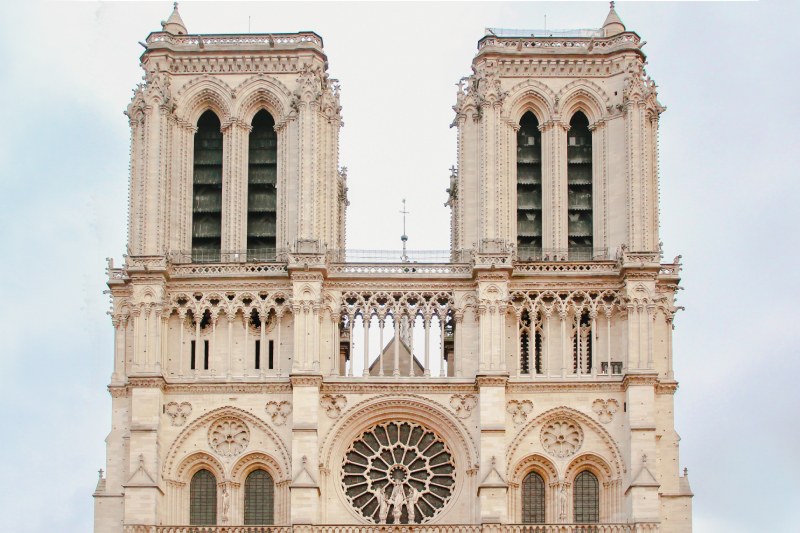
Notre-Dame Cathedral, built between the 12th and 14th centuries, is one of France’s oldest Gothic cathedrals. This architectural masterpiece, with its pointed arches, stained glass windows, and ribbed vaults, houses an important collection of religious and historical artefacts. Recognized as a UNESCO World Heritage Site since 1991, it stands as one of Paris’s most famous and beloved monuments, visited by millions each year.
Project at a glance
- After the 2019 fire, Notre-Dame Cathedral required a modern, non-invasive fire protection system capable of safeguarding its historic structure without altering its architecture.
- Marioff’s HI-FOG® system was validated through large-scale fire testing at INERIS, using a 0.4-scale model of the attic to replicate real fire scenarios.
- The tests confirmed HI-FOG’s ability to smother fires in their early stages within minutes, ensuring minimal water use and maximum preservation of the monument.
- With its installation, Notre-Dame became the first cathedral in France protected by HI-FOG®—joining many other historic landmarks around the world already safeguarded by this technology.
A devastating fire that changed everything
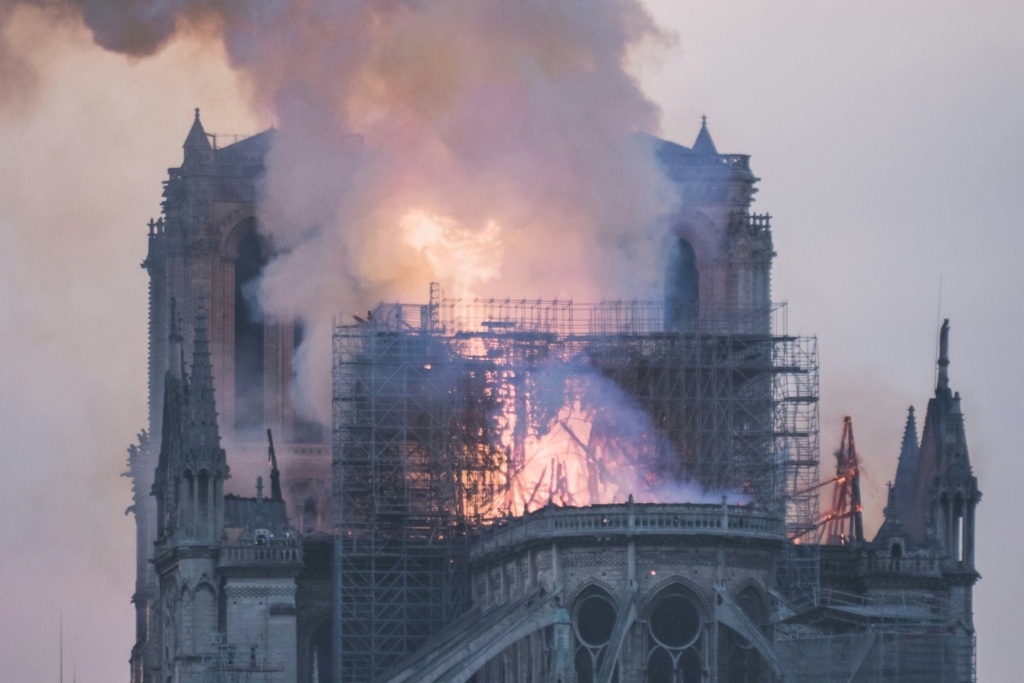
In April 2019, a devastating fire caused severe damage to the building, including the destruction of the medieval roof structure and its emblematic spire. The event shocked the world and highlighted the vulnerability of historic landmarks to modern fire risks. The rebuilding of Notre-Dame required a modern, non-invasive fire suppression solution—one that could ensure maximum safety while preserving the building’s priceless heritage and architecture.
Modern fire protection for a historic masterpiece
Notre-Dame Cathedral in Paris is the first cathedral in France to be equipped with a high-pressure water mist fire suppression system, joining many other historic churches and cultural landmarks around the world that already rely on Marioff’s HI-FOG® technology for fire protection.
Marioff designed and implemented the HI-FOG system, which protects the entire structure: the spire stool, the north and south transept arms, the nave, and the choir. The project was conducted under the supervision of the public institution Rebuilding Notre-Dame de Paris. The public had the opportunity to see the scale of this remarkable restoration when Notre-Dame reopened its doors on December 8, 2024.
Conception based on rigorous fire testing
Testing is everything: HI-FOG® by Marioff is the most tested high-pressure water mist system available—tested both in Marioff’s facility in Finland, as well as by independent accredited laboratories. Some tests focus on specific risk types or applications, while others, like those conducted for Notre-Dame, are tailored for unique projects to ensure performance in even the most challenging environments.
To select the most suitable fire protection approach, Rebâtir Notre-Dame de Paris, in collaboration with chief architects of historic monuments and the project management team, commissioned the French National Institute for Industrial Environment and Risks (INERIS). Their task was to identify innovative and effective solutions for the protection of such a historic monument.
Initially, simulations of the 2019 fire were carried out on a scale model representing the cathedral’s roof, transept, and spire. These simulations helped assess both passive and active fire defense measures, including automatic water mist systems. The studies confirmed that high-pressure water mist technology offered the best possible safety solution—combining rapid fire suppression with minimal water damage, ideal for heritage structures.
Following Marioff’s selection through a public tender, large-scale real fire tests were organized at INERIS to validate the HI-FOG system’s performance under realistic conditions. A 0.4-scale model of the attic was constructed inside a specialized chamber. During the tests, a first fire was extinguished using the HI-FOG system, followed by a free-burn test under identical conditions to measure heat release rate and combustion behavior.
The results demonstrated that HI-FOG successfully met the performance objective: smothering a fire in its early stages within the first few minutes, confirming its suitability for protecting Notre-Dame’s reconstructed roof and spire.
Advanced water mist technology that protects heritage
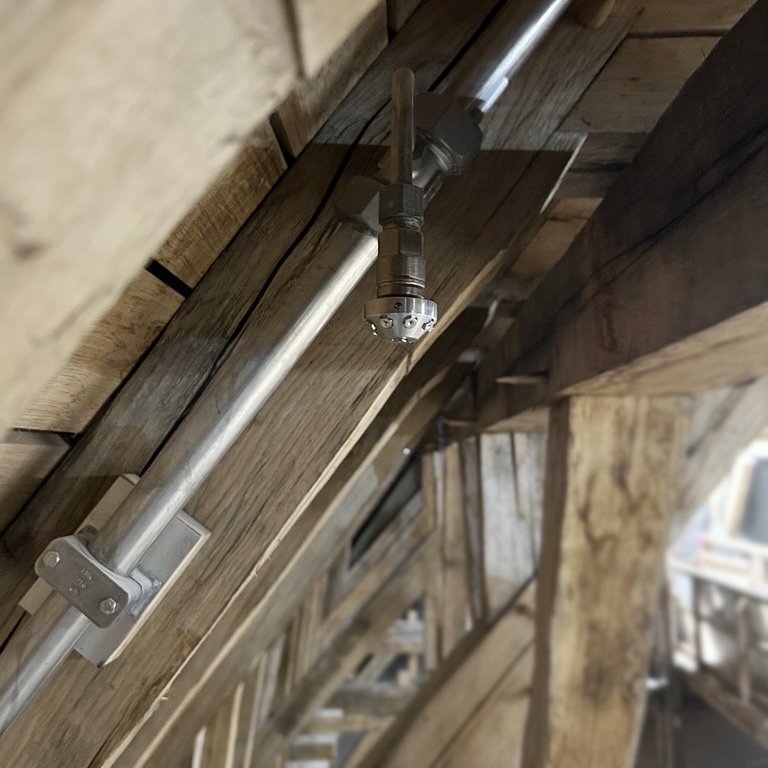
HI-FOG’s effectiveness lies in its micro-droplets. When a fire is detected, the system automatically activates: pump units located in the Soufflot cellar feed water through stainless steel piping to the nozzles in the affected area. These nozzles release a fine mist that absorbs heat and reduces oxygen around the fire, smothering flames rapidly.
This not only prevents the fire from spreading but also minimizes water damage—a crucial factor in preserving the cathedral’s fragile stone vaults and artworks. The result is faster fire suppression, lower collateral damage, and enhanced safety for both the monument and emergency responders.
Modular design for complex architecture
The modular and compact design of the Marioff HI-FOG system, combined with the expertise of Marioff’s engineering and operational teams, allowed the system to adapt seamlessly to the cathedral’s unique architectural challenges. Routing the piping through narrow spaces, maintaining visual discretion, and ensuring compatibility with historical materials required meticulous planning and execution.
Through close cooperation between Marioff, the project authorities, and heritage specialists, the HI-FOG system became an integral yet almost invisible guardian of one of the world’s greatest architectural treasures.
Preserving the past, protecting the future
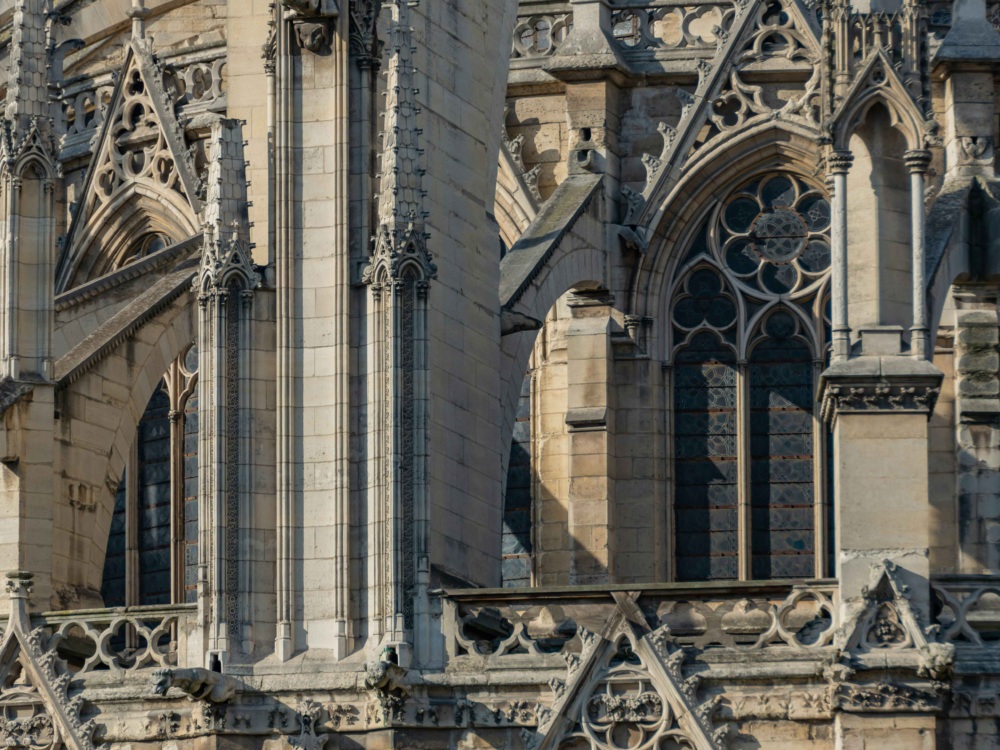
From historic hotels to cathedrals and cultural landmarks, Marioff’s HI-FOG® systems deliver reliable fire protection with minimal water damage.
Read more